Remodel Debris Disposal in Dothan: Drywall, Tile and Cabinets, Room by Room
Gutting a kitchen or bathroom fills a driveway faster than most people expect, and the city won’t haul it away. Here’s where torn-out drywall, tile and cabinets go, how heavy they get, and what to check before the first swing.
Quick answer
Remodel debris disposal in Dothan is a private job. The City of Dothan doesn’t collect construction or demolition debris, and the city’s alteration permit makes the applicant responsible for removing all of it. Most kitchen and bath tear-outs go into a 10- to 20-yard roll-off and end up at a permitted C&D site such as Omussee C&D or Rosehill Landfill. Sort out reusable cabinets and fixtures first, keep paint and chemicals out of the load, and size the container by weight, because tile and plaster run heavy. In a home built before 1978, check for lead paint and asbestos before you start.
Can Remodel Debris Go Out With Your Dothan Trash?
Mostly no. The City of Dothan’s garbage and trash page lists construction or demolition debris among the things crews don’t collect. Torn-out drywall, old tile, subfloor, countertops and framing scraps all fall into that group, even when the homeowner did the work.
What the trash pile does take
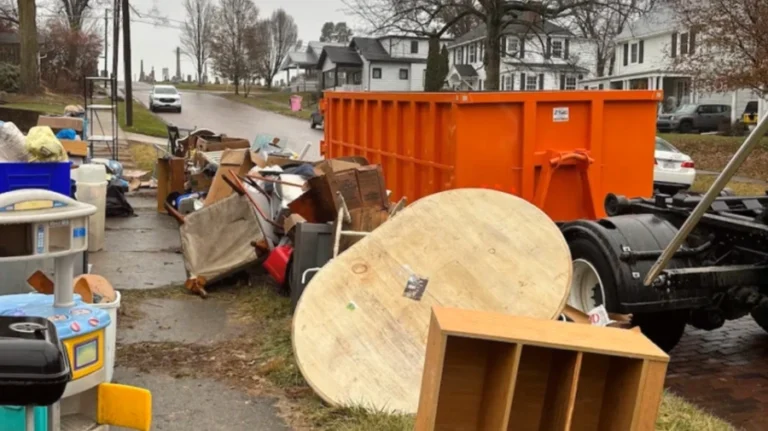
Dothan Environmental Services lists furniture and appliances as bulk items for the trash pile. So an old range or dishwasher pulled during a kitchen update may be able to go curbside on its own, while the cabinets and drywall around it can’t. Keep to one neatly stacked pile at the curb, out of the street, with room for the boom truck, and call (334) 615-3820 if you’re not sure.
The permit puts the debris on you
Dothan’s Residential Alteration/Repair Permit application asks the applicant to initial a line saying they’re responsible for removing all debris related to the project. If you pull the permit yourself, plan the haul before you apply.
Where Does Drywall, Tile and Cabinet Waste Go Around Dothan?
For remodel debris disposal, usable pieces go to reuse and the rest goes to a permitted construction and demolition site. With the city’s sanitary landfill closed, the City of Dothan’s landfill page points residents to private C&D sites.
Omussee C&D on Kinsey Road
Listed by the city as permitted for construction and demolition debris (334-671-8844), and the closest option for most Dothan homes. Hours and directions are in our guide to Dothan disposal sites.
Rosehill Landfill near Midland City
Also listed by the city for C&D debris (334-983-6576). It’s a practical run for remodels on the northwest side of town, off US-231. Call either site first to confirm it takes drywall, tile and carpet from a residential job.
Cabinets, doors and fixtures: try reuse first
Wiregrass Habitat for Humanity runs a ReStore at 2086 Montgomery Highway, (334) 792-8453, which sells donated furniture, appliances and building materials. Call before you pull anything to ask whether they’re taking cabinets, vanities, doors or light fixtures and whether they pick up. Cabinets come out cleaner when you unscrew them from the wall instead of prying.
How Heavy Is Remodel Debris?
Heavier than it looks. EPA’s standard volume-to-weight conversion factors put drywall at about 467 pounds per loose cubic yard and mixed construction and demolition debris at roughly 417 to 484 pounds. Lumber and carpet are lighter. Weight, not space, is usually what fills a remodel container’s allowance.
| Material | EPA estimate (lbs per loose cubic yard) | What it means on a remodel |
|---|---|---|
| Drywall (clean or painted) | About 467 | A gutted bathroom’s walls and ceiling add up fast |
| Mixed C&D debris | About 417 to 484 | A typical kitchen tear-out mix |
| Dimensional lumber | About 169 | Studs, trim and subfloor scraps are bulky but light |
| Carpet | About 147 | Roll it tight to save space |
| Concrete, with or without rebar | About 860 | Mortar beds and old shower pans |
| Asphalt roofing | About 731 | If a roof job overlaps the remodel |
Figures are EPA’s April 2016 standard conversion factors for loose material. EPA doesn’t list ceramic tile or cabinets, so treat tile as heavy and cabinets as bulky. Use these to plan, not as a promise of tonnage.
Tile is the wild card
Floor and wall tile come off with thinset and sometimes a mortar bed or cement board behind them. That’s dense masonry, much closer to concrete than to drywall, so tell the hauler how many square feet of tile are coming out.
Plaster in older houses
Some older Dothan homes have plaster walls instead of drywall. Plaster and lath weigh far more than modern board, and our dumpster size guide flags plaster as heavy debris.
Wet drywall gets heavier
Gypsum soaks up water. An open container left out through a Wiregrass downpour can gain real weight, so cover the load with a tarp when rain is in the forecast.
What Size Container Fits a Kitchen or Bathroom Remodel?
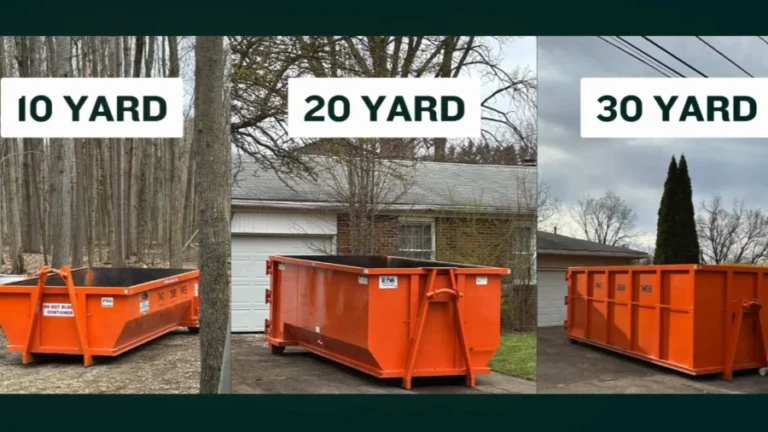
For remodel debris disposal at most homes, a 10-yard for a bathroom gut, a 15-yard for a small kitchen or flooring job, and a 20-yard for a full room remodel. Go bigger only when the job is large and light.
| Remodel | Usual size | Watch for |
|---|---|---|
| Bathroom gut (tile, tub, vanity, drywall) | 10 yard | Tile and mortar weight |
| Flooring tear-out (carpet, pad, laminate or tile) | 15 yard | Tile floors run heavy |
| Small kitchen remodel (cabinets, counters, drywall) | 15 yard | Stone countertops are heavy |
| Full room or multi-room remodel | 20 yard | Plaster walls in older homes |
| Whole-house or large remodel | 30 yard | Plan a swap rather than overfilling |
Long jobs and swaps
A remodel that runs for weeks may be better served by a smaller container and a swap than one big box in the driveway. Our roll-off rentals for remodelers cover swaps by text.
Driveway placement
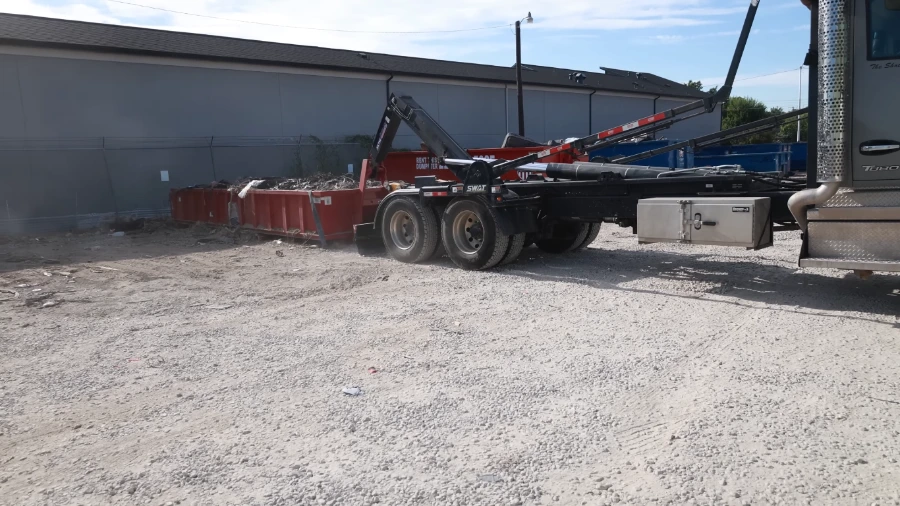
Most homes in neighborhoods around Westgate Park or inside the Ross Clark Circle fit a 10- to 20-yard container in the driveway. Put boards under the rails to protect the surface, and keep it clear of low limbs and power lines.
Do You Need a Permit for a Remodel in Dothan?
Usually, yes. The City of Dothan’s permit page says a permit is required for new construction, alterations or additions and for all electrical and plumbing work. Painting and replacing floor covering don’t need one, regardless of cost.
Who to call
Permits and Inspections is in the Dothan Civic Center building at 126 N. Saint Andrews Street, (334) 615-4450 or permits@dothan.org. Owners may pull a permit for their own work; otherwise a City-licensed contractor must.
What Should You Check Before Tearing Out Old Drywall, Tile or Paint?
The age of the house. If it was built before 1978, plan for lead paint and asbestos before anything gets sanded, cut or broken, because both can turn tear-out dust into a health hazard.
Lead paint in pre-1978 homes
EPA’s Renovation, Repair and Painting rule applies to paid work in homes built before 1978. Contractors who disturb more than 6 square feet of painted surface per room inside, or 20 square feet outside, must be lead-safe certified, and window replacement and demolition of painted surfaces are always covered. Ask anyone you hire for their certification.
Asbestos: you can’t tell by looking
EPA says you can’t tell whether a material contains asbestos just by looking at it, and that drywall joint compound can’t be cleared without testing. Older vinyl floor tile, sheet flooring adhesive and textured ceilings are common suspects. If a remodel will disturb them, have a trained, accredited inspector take samples.
What ADEM says to homeowners
ADEM’s asbestos page says privately owned homes of four or fewer units are exempt from the asbestos regulations but must still follow state solid waste rules, and it warns that the exemption can put homeowners at risk. Asbestos-containing material doesn’t belong in a regular roll-off; questions go to ADEM at 334-271-7879.
Keep these out of the container
Paint, stain and solvent cans with liquid in them, batteries, and appliances that still hold refrigerant. Our list of items that are banned from dumpsters shows where each one goes around Dothan.
How Do You Sort Remodel Debris on Demo Day?
Pull what can be reused, set aside what’s banned, then load heavy material first. Good sorting makes remodel debris disposal simpler at the C&D site. Use this checklist the morning the tear-out starts.
| Step | What to do |
|---|---|
| 1. Before demo | Call the ReStore about cabinets, doors and fixtures; test suspect materials in pre-1978 homes |
| 2. Shut-offs | Turn off water and power to the room; disconnect appliances properly |
| 3. Pull reusables | Unscrew cabinets and vanities whole; remove doors and hardware |
| 4. Set aside banned items | Paint cans, chemicals, batteries and refrigerant appliances go elsewhere |
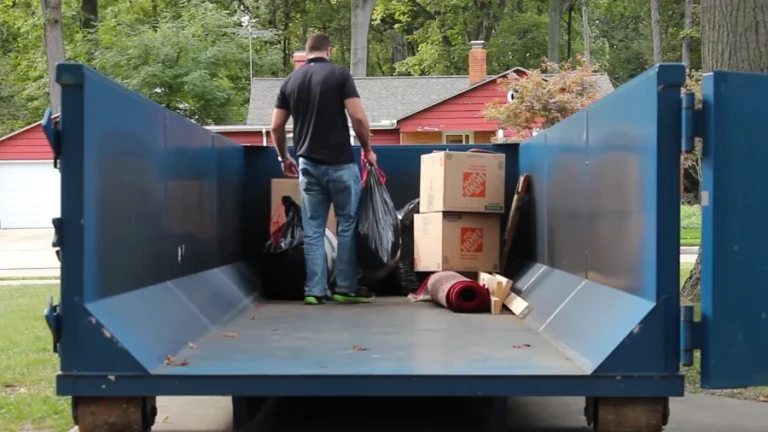
| 5. Load heavy first | Tile, mortar beds and plaster flat across the floor of the container |
| 6. Then bulky and light | Drywall, lumber, carpet and broken cabinet boxes on top |
| 7. Pull or bend nails | Protruding nails and screws make loading dangerous |
| 8. Cover and check | Tarp the load before rain and keep it below the top rail |
When Is the Best Time to Schedule a Remodel Tear-Out?
Any time of year works indoors, but the weather still matters for the container outside. The National Weather Service office in Mobile notes that the area has two severe weather seasons: March through May, and a secondary fall season from November through mid-December.
Fall and spring storms
If a storm hits mid-remodel, keep fallen limbs out of your remodel load and see storm cleanup containers instead. Tarp the box ahead of heavy rain.
Across the Wiregrass
The same timing applies whether you’re in Dothan proper, Headland, Midland City or out toward Fort Rucker (formerly Fort Novosel). Our delivery area page lists the towns we cover.
Remodel Debris FAQs
Related pages and guides
How this guide was researched
Sources: the City of Dothan’s garbage, trash and recycling page, landfill page, permit requirements page and Residential Alteration/Repair Permit application; EPA’s volume-to-weight conversion factors (April 2016), Renovation, Repair and Painting program and asbestos FAQ; ADEM’s asbestos certification and demolition page; the NWS Mobile severe weather awareness page; and Habitat for Humanity’s Wiregrass Habitat listing. Checked November 18, 2026. Site and permit rules change, so call before you haul. This is general information, not legal advice. See our sources and data standards.
Planning a Kitchen or Bath Tear-Out?
Tell us which rooms are coming apart, how much tile is involved and how long the job will run, and we’ll help line up a container sized for the load. Call or text (334) 483-0338.