What Can’t Go in a Dumpster? Alabama Rules and Where Banned Items Go Around Dothan
One paint can or an old fridge can turn a smooth haul into a load that gets set aside at the disposal site. Here’s what stays out of a roll-off, why the rules exist, and where each problem item can go in the Wiregrass.
Quick answer
What can’t go in a dumpster comes down to items that are hazardous, flammable or regulated: paint and solvents, motor oil, pesticides and pool chemicals, propane tanks, car and lithium batteries, tires, and appliances that still hold refrigerant. Electronics and suspected asbestos need a phone call first. Around Dothan, chemicals, electronics and a few tires go to the city’s household hazardous waste day at Westgate Recycling Center when it’s scheduled, tires go back to a tire shop, and refrigerant has to be recovered before an appliance is scrapped or buried. Furniture, flooring, drywall, lumber and household junk are usually fine.
What Can’t Go in a Dumpster in Alabama?
The short list is anything that can leak, burn, explode or poison groundwater. Alabama landfills and C&D sites are permitted for specific waste types, and the City of Dothan’s landfill page notes that oils, paints and lacquers, household and pool chemicals, and pesticides or herbicides won’t be accepted at the area disposal sites it lists. If the site can’t take it, the container can’t carry it.
| Item | Why it’s kept out | Where it can go around Dothan |
|---|---|---|
| Paint, stains, solvents, lacquer | Flammable liquids that leak in transit | City Household Hazardous Waste Collection Day when scheduled |
| Motor oil, filters, grease | One oil change can foul a million gallons of water (EPA) | Ask local auto service shops and waste officials for a drop-off point |
| Pesticides, herbicides, pool chemicals | Toxic, reactive when mixed | City HHW day, or Alabama’s free Clean Day pesticide collection |
| Propane tanks and cylinders | Pressure and explosion risk | Return or exchange through a propane supplier |
| Car batteries and lithium-ion packs | Acid, lead and fire risk | Battery recyclers, retailer take-back, HHW collection |
| Tires | Not accepted whole at most sites | Tire retailers; Rosehill only if shredded or quartered |
| Refrigerators, freezers, AC units | Refrigerant must be recovered first | City bulk pickup or a scrap recycler that handles refrigerant |
| TVs and electronics | Most haulers turn them away | City HHW day; phone kiosks for small devices |
| Suspected asbestos | Special handling rules | Test first; some C&D sites take it by appointment only |
Why the list is about the site, not the container
The roll-off itself is just a steel box. What matters is where it’s emptied. Construction and demolition sites like Omussee C&D on Kinsey Road and Rosehill Landfill near Midland City take building debris, not chemicals. Our Dothan disposal-site guide lists what each site takes.
Rules can be stricter than this list
Each hauler sets its own accepted-items list on top of state and federal rules. Ask before you load anything you’re unsure about, and say it out loud when you book.
Why Are Some Items Banned From Roll-Off Dumpsters?
Three reasons: fire, pollution and the people who handle the load. A box that looks harmless in your driveway gets dumped, pushed and compacted later, and a sealed can or a crushed battery can fail at exactly that moment.
Fire risk from batteries and fuel
EPA says lithium-ion batteries should not go in household garbage or recycling bins, because batteries damaged during hauling or sorting create a fire hazard. The same goes for gas cans, propane cylinders and oily rags packed in with dry wood and cardboard.
Groundwater and the sandy Wiregrass soil
Liquids like oil, antifreeze and pesticide rinse don’t stay put. EPA’s used-oil guidance puts it bluntly: oil from one oil change can contaminate one million gallons of fresh water. That’s the reason disposal sites screen for liquids.
What happens if a banned item turns up
The load can be flagged at the scale or the tipping floor, and someone has to pull the item back out and arrange separate disposal. At best that means lost time and a second trip. The easier path is sorting before anything goes over the wall.
Federal rules that reach your garage
Two federal rules show up in ordinary cleanouts: the Clean Air Act refrigerant rule for old appliances, and the asbestos rule for some renovation and demolition work. Both are covered below.
Where Do Paint, Oil and Household Chemicals Go in Dothan?
To a household hazardous waste collection, not a dumpster and not the curb. The City of Dothan has held a Household Hazardous Waste Collection Day at Westgate Recycling Center, 2725 Choctaw Street, on April 26, 2025 and again on April 25, 2026, from 8 a.m. to noon.
What the city’s collection day has taken
The 2025 city notice listed paints, oils, greases, solvents, cleaning supplies, pesticides, household chemicals, electronics, computers, old tires and records for shredding. The 2026 event, co-sponsored with the 334 Prevention Project, also took pills and capsules, but not liquid medicine, sharps or needles.
Between collection days
Keep leftover chemicals in their original labeled containers, lids tight, on a shelf away from kids and heat. Watch the city’s news page and call Environmental Services at (334) 615-3820 to ask about the next date. Never pour anything into a storm drain or roadside ditch.
Used motor oil and filters
EPA tells do-it-yourselfers to check with local auto maintenance shops, waste collectors and government waste officials for a drop-off point, and to drain filters and take them to the same place. Store used oil in a sealed container that won’t leak.
Pesticides from the shed or the farm
Alabama runs a free Clean Day Pesticide Disposal Program through the Department of Agriculture and Industries and the Alabama Cooperative Extension System. It takes unwanted pesticides, herbicides, fungicides and rodenticides, including out-of-date products. Collection days are held in different counties, and as of this check the 2026 date hadn’t been announced.
Can Tires, Batteries or Electronics Go in a Dumpster?
Usually not. Each has its own route, and most of them are easier than people expect.
Tires
The City of Dothan’s trash page lists tires among items crews won’t collect. Rosehill Landfill takes tires only if they’re shredded or quartered. The simplest route is the shop that sells your replacement tires. ADEM also warns that storing more than 100 scrap tires on a property needs its approval, so don’t let a pile build behind the barn.
Car, mower and boat batteries
Lead-acid batteries are heavy, full of acid and highly recyclable. Ask the store where you buy the new one whether it takes the old one back, and keep it upright in a box until then.
Lithium-ion batteries and power tools
EPA says lithium-ion batteries should go to separate recycling or household hazardous waste collection points. Tape the terminals, bag each battery, and look up a drop-off through Call2Recycle or Earth911. This matters most after the holidays, when old phones, vapes and tool packs get replaced.
TVs, computers and small electronics
Most haulers turn TVs and electronics away, and the city’s recycling drop-off sites list electronics as prohibited. The city’s collection day has taken electronics and computers, and our landfill guide lists a phone kiosk for small devices.
Can a Refrigerator or AC Unit Go in a Dumpster?
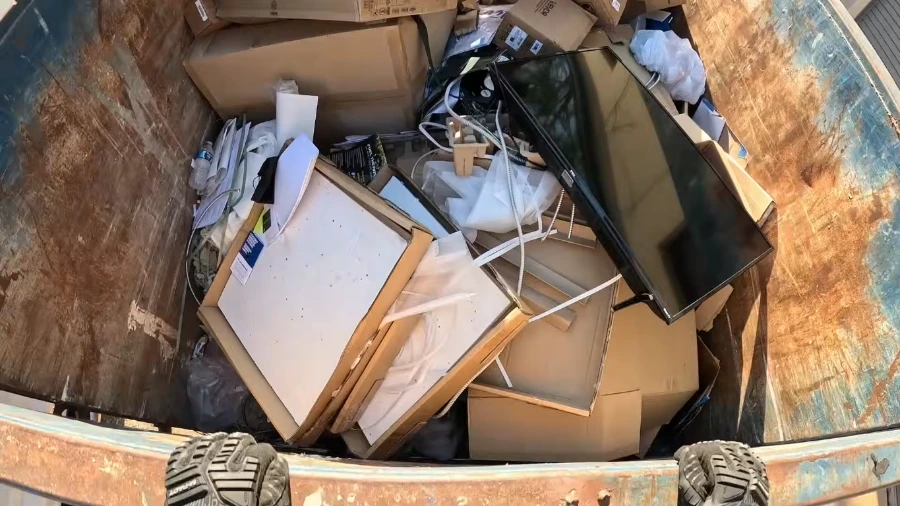
Not until the refrigerant is out, and usually not even then without asking. Under the Clean Air Act appliance rule, 40 CFR 82.155, the final processor, such as a scrap recycler or landfill, has to recover the remaining refrigerant or get a signed statement that someone else did, with that person’s name and the recovery date.
Why the haul gets complicated
EPA’s appliance guide for local governments says appliances containing refrigerant shouldn’t go into collection containers or roll-offs headed straight to a landfill. It also says refrigerators should be stored upright with the doors removed.
Window units and dehumidifiers count too
Window AC units, dehumidifiers, freezers and wine coolers all hold refrigerant. EPA treats sealed units holding five pounds or less as small appliances, and the recovery rule still applies.
The city’s bulk trash pile
Dothan’s trash collection page lists furniture and appliances under bulk items for the curbside pile, one pile per home, neatly stacked. Call Environmental Services at (334) 615-3820 before setting out a fridge or AC unit so you know how they handle it.
Older appliances can hide other parts
EPA notes older appliances may contain mercury switches, and capacitors made before 1979 may contain PCBs. One more reason to let a recycler handle them.
Is Asbestos or Old Building Material Allowed?
Not without testing and the right paperwork. If you suspect asbestos in flooring, siding, duct wrap or a popcorn ceiling, have it tested before tear-out, and don’t toss it in with regular remodel debris.
What ADEM says about homes
ADEM’s asbestos page says privately owned residential buildings of four or fewer units are exempt from the federal asbestos rules, but they still must follow state solid waste regulations. The exemption doesn’t apply when the house is part of a larger project.
Friable versus non-friable
Friable material, the kind that crumbles by hand, must be disposed of as special waste regardless of amount. Non-friable material can usually go as general or construction waste, though removed Category II material has to be disposed of separately.
Where it can go
Rosehill Landfill lists asbestos as accepted by appointment only. Call the site and the hauler before anything is bagged.
What Can Go in a Dumpster Instead?
Most of what a cleanout or remodel produces. Knowing what can’t go in a dumpster is the short list; the long list is everything else. Here’s a quick sorting checklist for the garage, the attic or a whole house.
| Usually fine | Ask first | Keep it out |
|---|---|---|
| Furniture and mattresses | Refrigerators, freezers, AC units | Paint, stain, solvents |
| Carpet, padding, flooring | TVs and electronics | Motor oil, gas, antifreeze |
| Drywall, lumber, cabinets | Concrete, brick and dirt (weight) | Pesticides, pool chemicals |
| Shingles and siding | Yard waste mixed with junk | Propane tanks, batteries |
| Toys, clothing, boxes | Railroad ties and treated wood | Tires, sharps, suspected asbestos |
Heavy items change the size
Concrete, brick and shingles fill weight before they fill space. The container size guide explains why heavy debris goes in a smaller box, and our concrete and brick disposal guide covers rubble.
Household cleanouts
For estates, moves and garage purges, our home cleanout dumpster rental page covers placement and timing, and the estate cleanout checklist helps families sort what to keep.
How Do You Avoid a Rejected Dumpster Load?
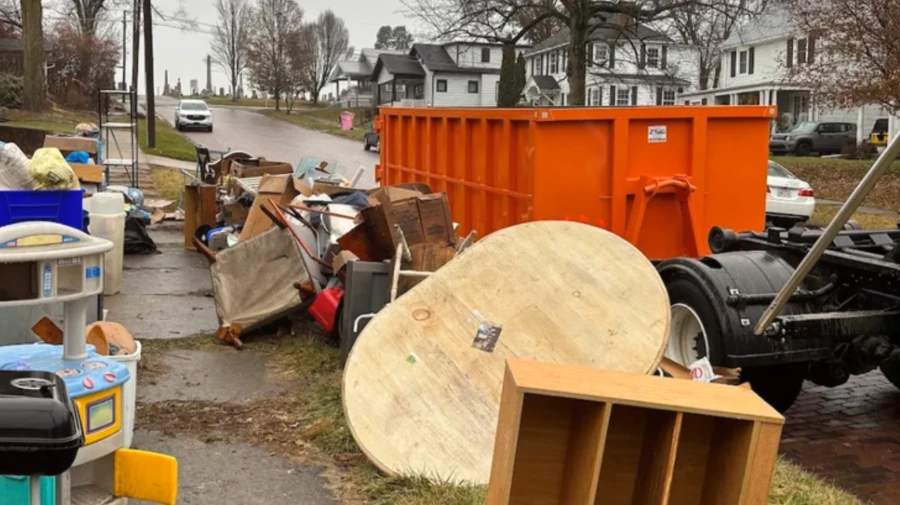
Sort before you start, and tell the hauler what’s coming. A printed copy of what can’t go in a dumpster taped inside the garage door helps helpers sort too. Most problem items surface in the first hour of a cleanout, so set them aside right away instead of digging them out later.
Set up a no bin on day one
Put a sturdy box or tote in the garage for paint cans, batteries, chemicals and aerosol cans. When the job’s done, everything in it goes to the right drop-off in one trip.
Describe the job when you book
Mention appliances, mattresses, electronics or anything you’re unsure about. It’s the fastest way to learn which items need their own route, and it’s step one of how a rental works.
Watch the calendar
November brings fall cleanouts and the second severe-weather season in Alabama, and spring brings the main tornado peak. After a storm, keep damaged appliances, fuel cans and batteries out of the debris pile. Military families moving out of Fort Rucker (formerly Fort Novosel) neighborhoods in Enterprise, Ozark and Daleville can run into the same paint and propane questions on move-out week.
Sharps go in the household cart
Needles and lancets don’t belong in a roll-off or the recycling cart. ADEM’s home sharps guidance says to use a puncture-resistant plastic or metal container, label it Do Not Recycle, seal the cap with heavy tape and place it in regular household trash.
Dumpster Banned Items FAQs
Related pages and guides
How this guide was researched
Sources: the City of Dothan’s garbage, trash and recycling page, landfill page, recyclable items page and 2025 Household Hazardous Waste Collection Day notice; Wiregrass Daily News coverage of the April 25, 2026 collection day; EPA’s appliance disposal rule, 40 CFR 82.155, appliance disposal guide, lithium-ion battery page and used oil page; ADEM’s asbestos and demolition page, scrap tire program, scrap tire fact sheet and home sharps guidance; and the Alabama Department of Agriculture and Industries Clean Day pesticide disposal program. Checked November 16, 2026. Rules and event dates change, so call before you haul. This is general information, not legal advice. See our sources and data standards.
Not Sure If It Can Go in the Box?
Tell us what’s in the garage, the attic or the job site, and we’ll help sort out what goes in the container and what needs its own drop-off before delivery. Call or text (334) 483-0338.