Concrete Disposal in Dothan: Where Broken Slabs, Brick and Dirt Can Go
A busted patio or an old block wall is some of the heaviest debris a homeowner will ever move. Here’s what the city won’t pick up, where rubble and fill dirt actually go, and how to keep weight from wrecking your plans.
Quick answer
Concrete disposal in Dothan works differently from regular trash. The City of Dothan doesn’t pick up construction or demolition debris at the curb, so broken slabs, brick, block and dirt need a private haul. Most loads go into a small roll-off container or a contractor’s dump truck and end up at a permitted C&D site, or get reused as fill. Alabama’s solid waste rules treat uncontaminated concrete, brick, rock and soil differently from mixed demolition debris, so keeping the load clean gives you more options. Weight is the real limit: call the site before you load and keep heavy debris in a small container.
Can Concrete, Brick or Dirt Go in Your Dothan Trash Pile?
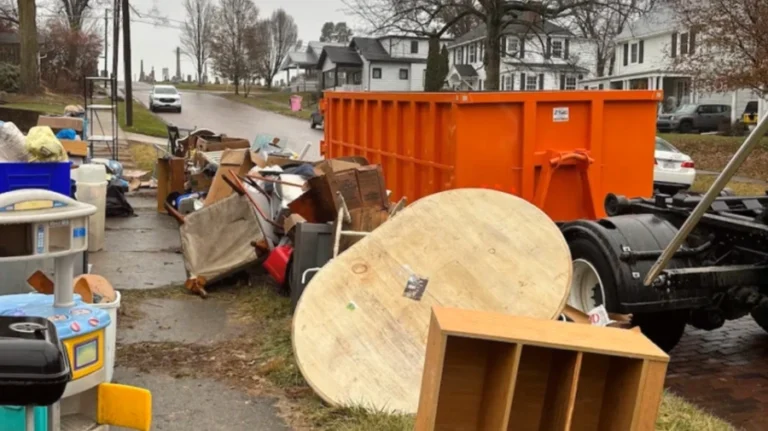
No. The City of Dothan’s garbage and trash page lists construction or demolition debris among the things crews don’t collect, and a broken driveway, a torn-out step or a pile of old brick fits that description. Leaving it at the curb just leaves it at the curb.
What the trash pile is for
Dothan Environmental Services runs a separate trash stream for yard waste and bulky household items. The rules are one pile per home, placed curbside rather than in the street, neatly stacked, with room left for the boom truck. Excessively large piles may not be collected.
What about dirt, rock and brick?
The city page doesn’t mention them specifically, and the same goes for homes in unincorporated Houston County: masonry and fill need a private haul. If you’re unsure about a mixed pile, call Environmental Services at (334) 615-3820.
Where Can You Take Broken Concrete Around Dothan?
To a permitted construction and demolition site, a recycler if one is taking material, or a property that legitimately needs fill. With the city’s sanitary landfill closed, the City of Dothan’s landfill page points residents to private C&D sites.
Omussee C&D on Kinsey Road
The closest C&D option for most of Dothan, listed by the city as permitted for construction and demolition debris (334-671-8844). Hours, payment rules and directions are in our Dothan disposal-site guide, which we re-check monthly.
Rosehill Landfill near Midland City
Also listed by the city as permitted for construction and demolition debris (334-983-6576). Midland City sits off US-231 northwest of Dothan, so it’s a practical run for jobs on that side of town.
Call before you load concrete
Neither site publishes a detailed rule for concrete with rebar, solid slabs over a certain size, or soil. Ask three questions on the phone: do you take broken concrete and brick, does rebar or wire mesh have to come out, and do you take dirt. Then load to match the answers.
Recycling into aggregate
EPA notes that concrete and rubble are often crushed into aggregate. For concrete disposal in Dothan, though, we couldn’t find a published concrete recycler taking public loads in the Dothan area, so ask the contractor doing the tear-out whether a crusher or recycle yard is buying or taking material that month.
How Does Alabama Treat Clean Concrete, Brick and Soil?
More gently than mixed demolition debris. ADEM’s solid waste definitions (Ala. Admin. Code 335-13-1-.03) list masonry, sheet rock, roofing and wood as construction/demolition waste, then exclude uncontaminated concrete, soil, brick, waste asphalt paving and rock from that definition.
What “uncontaminated” means in practice
Concrete and brick with nothing else mixed in: no paint cans, no treated lumber, no household trash, no oily soil from under an old car. Once rubble is mixed with other debris, treat the whole load as C&D waste.
Reuse on your own property
EPA’s guidance on construction materials says brick, concrete and masonry can be recycled on site as fill, subbase material or driveway bedding. Busted slab under a new gravel pad is a common example.
What the definition doesn’t allow
It isn’t permission to dump on someone else’s land, in a creek, a wetland, a drainage ditch or a city right-of-way. Oil stains, old coatings or suspected asbestos change the answer too. For questions about grading or drainage, call Dothan Engineering Services at (334) 615-4420.
How Heavy Is Concrete Debris, and Why Does Weight Matter?
Very heavy. Federal Highway Administration bridge guidance uses 145 pounds per cubic foot for normal-weight concrete, which works out to roughly 3,900 pounds, close to two tons, for one solid cubic yard. Broken chunks stack with air gaps, but the load is still heavier than almost anything else you’ll throw away.
| What comes out | Solid volume | Approximate weight |
|---|---|---|
| 4-inch patio, 10 ft × 12 ft | About 1.5 cubic yards | About 5,800 lbs (2.9 tons) |
| 4-inch driveway section, 12 ft × 20 ft | About 3 cubic yards | About 11,600 lbs (5.8 tons) |
| 6-inch shop slab, 20 ft × 20 ft | About 7.4 cubic yards | About 29,000 lbs (14.5 tons) |
Estimates use 145 lbs per cubic foot for plain concrete. Rebar, thicker edges and footings add weight. Use them to plan, not to promise a tonnage.
Why heavy debris needs a small container
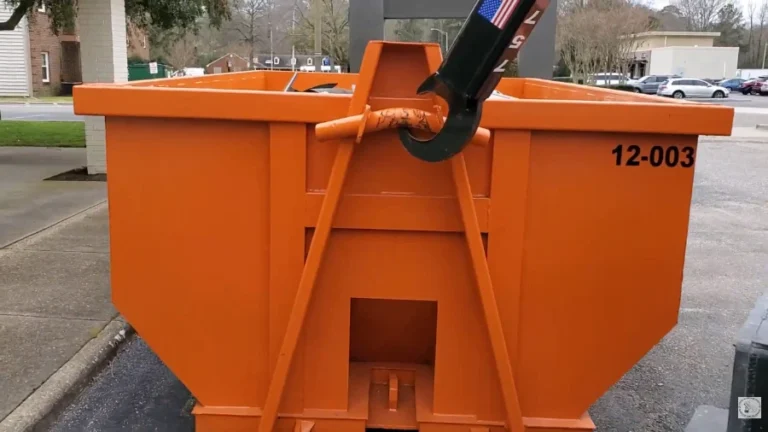
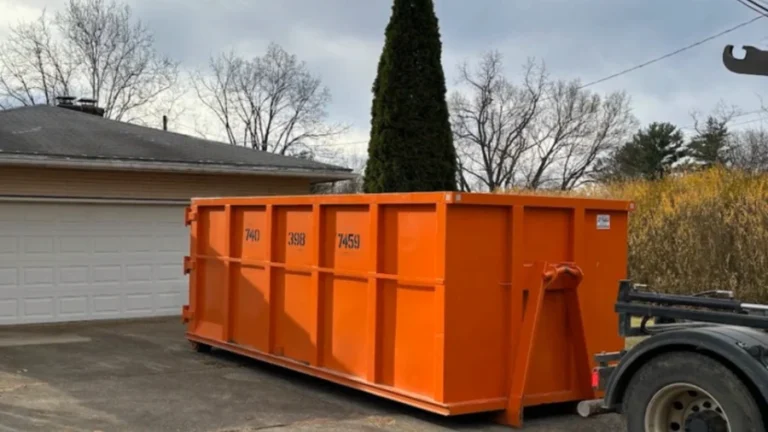
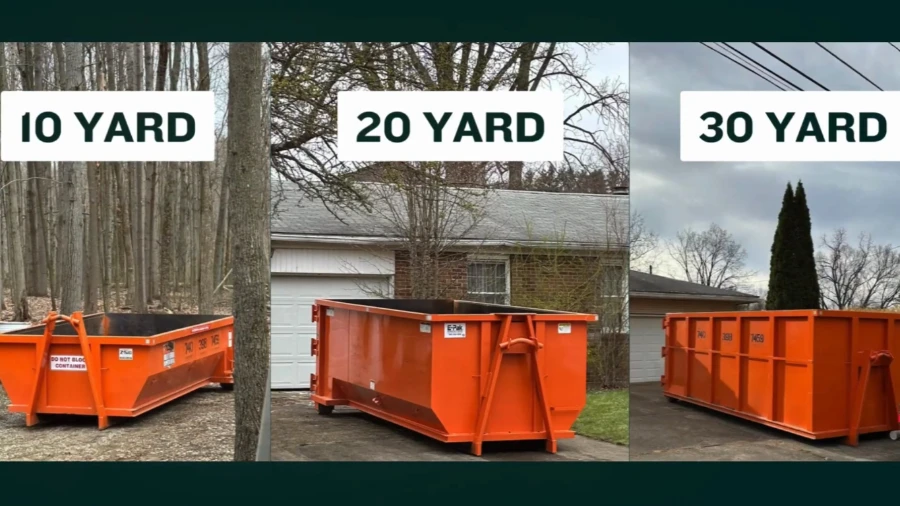
A large roll-off packed with rubble can be too heavy for the truck to lift. That’s why our container size guide points concrete, brick and dirt to a 10-yard unit, often called a small roll-off.
Respect the fill line
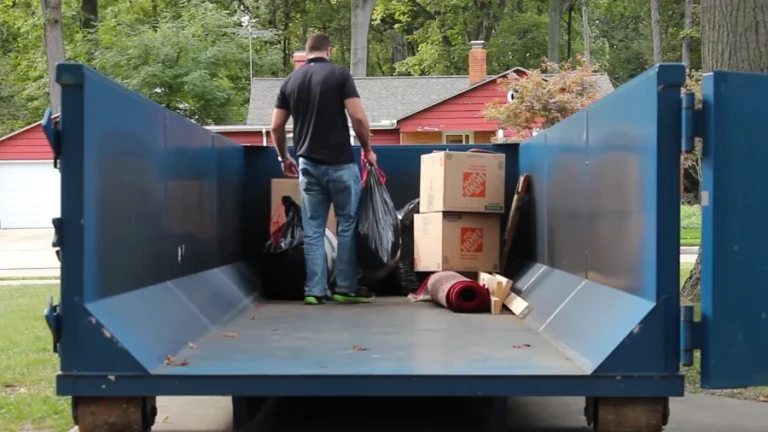
With heavy debris, many haulers ask you to fill only partway. Ask where that line sits before you start, and spread the weight evenly instead of piling it at one end.
Wet dirt weighs more
Soil soaks up water. After a few rainy days, the same pile weighs noticeably more, so schedule a dirt haul-off after a dry stretch when you can.
How Do You Keep a Concrete and Brick Load Clean?
Sort as you break it out, and keep drywall, trim and cabinets in a separate load. A clean load of masonry has more places to go than a mixed one, and it keeps the haul simple. Use this checklist on tear-out day.
| Belongs in a heavy-debris load | Keep it out |
|---|---|
| Broken slab, sidewalk and patio pieces | Household garbage and food waste |
| Brick, block and pavers | Paint, sealer and adhesive cans with liquid in them |
| Stone, gravel and rock | Treated lumber and forms (ask first) |
| Clean soil and sand (if the hauler allows it) | Tires and electronics |
| Mortar and old stucco pieces | Grass sod and stumps mixed into soil (ask first) |
Cut or bend the rebar
Long rebar or wire mesh sticking out of chunks makes loading dangerous and can snag on the container walls. Cut it flush or bend it in, and ask the site whether steel has to be separated.
Is Dirt From a Dothan Dig Different From Other Fill?
A little, and it changes how you plan the haul. The Dothan soil series, named for the city and established in Houston County in 1965, is the soil many Wiregrass yards and fields sit on. USDA describes a sandy loam surface over sandy clay loam subsoil, with plinthite nodules starting 24 to 60 inches down.
Topsoil versus subsoil
The top layer is loose and easy to reuse in beds. Dig deeper for a pool, footing or drainage line and you hit denser, clay-rich subsoil that’s heavy and slow to dry.
Roots and sod change the load
Soil full of grass, roots or stumps is closer to yard debris than to clean fill. Our yard debris container page covers brush and stumps; ask the hauler before mixing.
Call 811 before anyone digs
Alabama 811 asks for two full working days’ notice, not counting the day you call, before excavation, and marks stay valid for 20 working days. Call 811 or 800-292-8525, or use the homeowner request portal.
Do You Need a Permit to Tear Out a Slab or Structure in Dothan?
For tearing down a structure, yes: the City of Dothan handles demolition permits, full structure or interior only, through Permits and Inspections. For a patio or walk with no structure on it, call and ask before you start.
What the demolition permit says about debris
The city’s demolition application states that the applicant is responsible for removing all debris related to the project, so plan the haul before you apply.
Utilities and the sewer line
The applicant arranges utility disconnection. The sewer lateral has to be plugged behind the curb or sidewalk and inspected, and a septic tank is pumped, its bottom broken and back-filled with sand or soil before inspection.
Erosion control stays until the grass grows
Erosion control measures have to remain in place until the site is stabilized with grass, seed and mulch or sod. That matters on sloped lots and anywhere near a ditch.
Who to call
Permits and Inspections is at 126 N. Saint Andrews Street, (334) 615-4450 or permits@dothan.org.
Which Concrete Disposal Option Fits Your Job?
It depends on the size of the tear-out and who’s swinging the hammer. Here’s how the common setups compare for Dothan homes, whether you’re near Westgate Park, inside the Ross Clark Circle or out toward Fort Rucker (formerly Fort Novosel).
| Option | Works best for | Watch out for |
|---|---|---|
| Contractor hauls in a dump truck | Driveway and slab replacements done by a concrete crew | Get removal in the written estimate |
| Small roll-off container in the driveway | DIY patio, walk, block wall or footing tear-outs over several days | Weight limits and the fill line; boards under the rails |
| Pickup or trailer trips | A few wheelbarrows of brick or broken pavers | Axle and tire limits, site hours, loading by hand |
| Reuse on site | Clean rubble as base under a new pad or path | Keep it uncontaminated and out of drainage paths |
Storm season and fall timing
Fall patio and driveway work overlaps with the November severe-weather window. If a storm leaves fallen limbs on top of the job, keep them separate and see storm cleanup containers.
Bigger remodel on the way?
Concrete disposal in Dothan is often one piece of a larger build. Pair a small heavy-debris box with a larger one for framing scraps; our job-site container rentals cover both.
Concrete, Brick and Dirt Disposal FAQs
Related pages and guides
How this guide was researched
Sources: the City of Dothan’s garbage, trash and recycling page, landfill page, stormwater management page and demolition permit application; ADEM’s solid waste definitions, Ala. Admin. Code 335-13-1-.03; EPA’s construction and demolition materials guidance; the FHWA bridge design unit-weight reference for concrete weight; the USDA Dothan soil series description; and Alabama 811 requirements. Checked November 11, 2026. Site rules change, so call before you haul. This is general information, not legal advice. See our sources and data standards.
Breaking Up a Patio or Driveway?
Tell us what’s coming out, how thick it is and whether dirt is part of the job, and we’ll help line up a container sized for the weight. Call or text (334) 483-0338.