
Dumpster Sizes in Dothan, AL A Plain-English Guide to 10, 15, 20, 30 and 40 Yard Roll-Offs
Picking the wrong size is the most common dumpster mistake. Too small and you’re waiting on a swap halfway through the job. Too big and you’re paying for air. This guide shows what each size holds, how big it is on your driveway, and which one fits your project.
- 10 to 40 yard roll-offs
- Sized by weight, not just space
- Call or text for a recommendation
Quick answer
For most Dothan homes, a 20-yard dumpster is the safe middle pick. It handles a roof tear-off on a typical house, a full room remodel or an estate cleanout, and still fits a standard driveway. Choose a 10-yard for heavy debris like concrete, dirt or tile, a 15-yard for garage cleanouts and small remodels, and a 30- or 40-yard for whole-house cleanouts, new construction and land clearing.
Dumpster size comparison chart
A “yard” means one cubic yard of space: about 3 feet long, 3 feet wide and 3 feet tall. Every size below is a roll-off dumpster, the open-top steel box a truck slides onto your driveway or job site.
| Size | Typical dimensions (L × W × H) | Roughly holds | Best for |
|---|---|---|---|
| 10 yard | About 12–14 ft × 7.5–8 ft × 3.5 ft | About 3 pickup truck loads | Bathroom remodel, small cleanout, concrete, dirt, brick or tile |
| 15 yard | About 16 ft × 7.5–8 ft × 4 ft | About 4 to 5 pickup loads | Garage or attic cleanout, flooring job, small kitchen remodel |
| 20 yard | About 20–22 ft × 7.5–8 ft × 4–4.5 ft | About 6 pickup loads | Roof tear-off, full room remodel, estate cleanout, storm limbs |
| 30 yard | About 20–22 ft × 7.5–8 ft × 5.5–6 ft | About 9 pickup loads | Whole-house cleanout, new construction, large remodel |
| 40 yard | About 22 ft × 7.5–8 ft × 7–8 ft | About 12 pickup loads | Commercial cleanouts, major construction, large land clearing |
Dimensions are typical ranges and vary by manufacturer. Pickup-load numbers assume a standard full-size pickup bed loaded level, and they’re rules of thumb, not guarantees. Width barely changes between sizes. Dumpsters mostly get longer and taller as the yardage goes up.
How do I pick the right dumpster size?
Answer four questions and the right size usually picks itself.
- What’s going in? Bulky but light (furniture, carpet, boxes, brush) or heavy (shingles, tile, concrete, dirt, plaster)? Heavy debris runs out of weight allowance long before it runs out of space.
- How much of it? Picture it in pickup truck loads. If your pile would take six trips in a pickup, you’re looking at a 20-yard.
- Where will it sit? Measure your driveway or drop spot. Every size is about 7.5 to 8 feet wide, but a 20-yard needs over 20 feet of length, and the truck needs room to back in.
- Is the job one-and-done or ongoing? A remodel that runs three weeks may be better served by a smaller dumpster and a swap than one giant box sitting in the driveway.
When you’re between two sizes, go up one. The extra space usually costs less than a second haul. The exception is heavy debris: a bigger box filled with concrete can’t be lifted safely, so heavy loads go in smaller containers.
Which dumpster size fits your project?
Here’s where each size earns its keep on typical Dothan jobs.
10 yard: small and heavy
Pick it for a bathroom gut, a small cleanout, or heavy material like concrete, brick, dirt and tile. Its low walls make tossing heavy items in easier.
Watch out: bulky furniture fills it fast.
15 yard: the garage-cleanout size
A step up for garage, attic and shed cleanouts, flooring tear-outs and small kitchen remodels. It fits tighter driveways than a 20.
Watch out: tile and plaster get heavy quickly.
20 yard: the most popular size
The go-to for roof tear-offs on a typical home, full room remodels, estate cleanouts and storm limbs. Big enough for real jobs, small enough for a standard driveway.
Watch out: multi-layer roofs add serious weight.
30 yard: whole-house jobs
For whole-house cleanouts, new construction and large remodels. The taller walls hold a lot more volume.
Watch out: walls run about 6 feet high, so use the swing door for heavy items.
40 yard: the big job box
For commercial cleanouts, major construction and large land clearing, where bulky debris piles up fast.
Watch out: it needs lots of room and isn’t for heavy debris.
Not sure? Ask first
Tell us what you’re throwing out and roughly how much. We’ll recommend a size so you don’t pay for space you won’t use or run out halfway through the job.
Dumpster size by project
These are starting points for common jobs around Dothan. Your actual pile may be bigger or smaller, so tell us the details when you book.
| Project | Usual size | Why |
|---|---|---|
| Bathroom remodel | 10 yard | Tile, drywall and fixtures are heavy but compact |
| Kitchen remodel | 15 to 20 yard | Cabinets and countertops take space; add flooring and it grows |
| Roof tear-off (one layer, typical home) | 20 yard | Room for the shingles with weight in mind |
| Roof tear-off (two or more layers) | 20 yard plus a planned swap, or ask about heavy-duty options | Extra layers can double the weight |
| Garage, attic or shed cleanout | 15 yard | Mostly bulky, light items |
| Whole-house or estate cleanout | 20 to 30 yard | Furniture and decades of belongings add up fast |
| Rental turnover | 15 yard | Carpet, furniture and junk; speed matters more than size |
| Storm limbs and debris | 20 to 30 yard | Limbs are bulky; wet debris gets heavy |
| Concrete, brick or dirt | 10 yard | Heavy materials need a small container |
| New construction | 30 to 40 yard | Framing scraps, packaging and drywall over weeks |
| Land clearing and brush | 30 to 40 yard | Brush and stumps are bulky; ask whether stumps and dirt can go in |
Why heavy debris changes the math
Every rental comes with a weight allowance, and some materials eat it up fast. A dumpster half full of tile can outweigh one heaped with furniture.
- Shingles: a roofing square (100 square feet) of asphalt shingles commonly weighs around 200 to 400 pounds, depending on type and layers.
- Concrete, brick and dirt: among the heaviest materials you can toss. These usually go in a 10-yard, and you may be asked not to fill to the top.
- Wet storm debris: Dothan averages about 57 inches of rain a year. Soaked limbs, carpet and drywall weigh far more than dry.
- Plaster and tile: common in older Dothan homes and much heavier than they look.
Ask how much weight is included before you book, and tell us if heavy debris is part of the job. A smaller, heavy-duty load often works better than a big box.
Fill-line rules
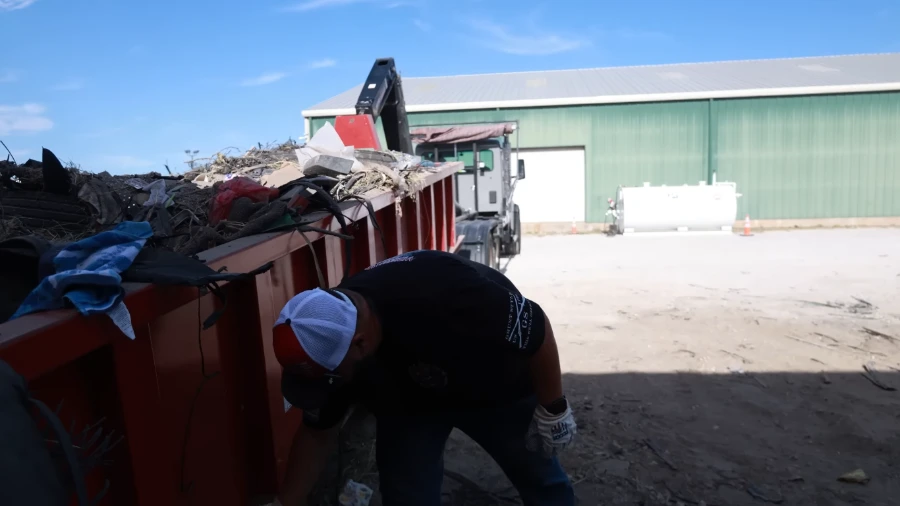
Nothing can stick up above the top rim. Overfilled dumpsters can’t be tarped or hauled safely, so the driver may have to remove the extra before pickup.
Will the dumpster fit in my driveway?
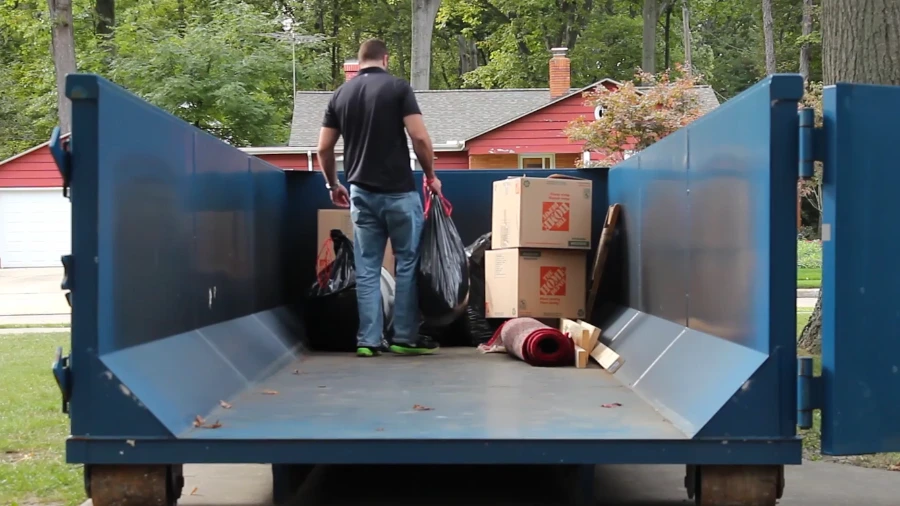
In most cases, yes. A roll-off is about 7.5 to 8 feet wide, and a standard driveway runs 9 to 12 feet wide. Length is what changes:
- A 10-yard needs roughly 12 to 14 feet of length.
- A 20- or 30-yard needs roughly 20 to 22 feet.
- The truck needs about 60 feet of straight-line space to back in and set the box down.
- Plan for about 23 feet of overhead clearance free of limbs and power lines. In older neighborhoods like the Garden District, low oak limbs are the usual problem.
Soft yards after rain, gravel drives and sloped lots all affect placement. Ask for boards under the rails to protect concrete and asphalt.
Which costs more: a dumpster that’s too big or too small?
Usually too small. If a dumpster fills up before the job is done, you need a swap: the full one is hauled away and an empty one dropped off. That means another trip, another wait, and a crew or family standing around in the meantime.
Going one size up costs less than a second haul in most cases. The exception is heavy debris, where a smaller container is the right call no matter how much space you think you need.
If you’re stuck between sizes, call or text us with what you’re tossing. A two-minute conversation saves most sizing mistakes.
Dumpster Size FAQs
Quick answers about picking a dumpster size in Dothan.
Keep planning your project
How this page was researched
Written by [Author Name], [Author Role]. Dimensions are typical industry ranges for roll-off containers; exact sizes vary by manufacturer. Shingle weights reflect common manufacturer ranges for asphalt shingles. Rainfall figure is Dothan’s long-term annual average. Last reviewed October 2026.
Not Sure Which Size? Ask Before You Book
Most sizing mistakes are avoided with one quick conversation.
- Tell us the material. Heavy debris changes everything.
- Tell us the amount. Rough pickup-truck loads are plenty.
- Tell us the spot. We’ll make sure it fits and the truck can reach it.
- Call or text to book
- Straight answers before delivery
- Extensions and swaps on request
Tell us what you’re working on, and Longleaf Dumpster Dothan will get the right dumpster headed your way. Call or text (334) 555-0142.